High Temperature NdFeB Magnets, H to EH Grades
Temperature picks the grade, not flux
This is the one page where the grade table, not the geometry, is the product. Sintered NdFeB loses flux as it heats and recovers it on cooling — until it passes its maximum operating temperature, after which the loss becomes permanent and the magnet is scrap. The maximum operating temperature by grade series is: N up to 80 °C, M up to 100 °C, H up to 120 °C, SH up to 150 °C, UH up to 180 °C, EH up to 200 °C. Tell us the temperature your part will actually reach and we start from the lowest series that clears it, because a hotter grade costs flux.
N52 is the grade most often misused
N52 has the highest flux of the sintered grades and the lowest heat tolerance: its maximum operating temperature is 60 °C, against 80 °C for N35–N48. A designer who picks N52 to maximise force on a part that will run at 90 °C will get a magnet that is strong on the bench and demagnetized in service. For higher temperatures we move to an H, SH or UH grade and accept slightly lower flux — the correct trade is a smaller, known number instead of a larger number that does not survive.
What H / SH / UH / EH are each for
The series differ by intrinsic coercivity, which is what resists demagnetization at temperature: M for mildly warm assemblies, H for a part near a warm housing, SH for motor and automotive work that sees sustained heat, UH for harsher automotive and industrial duty, and EH where the environment approaches the practical limit for NdFeB. All are produced across N35–N52 where the grade and coercivity combination exists.
Coating matters more at temperature
At temperature, coating adhesion matters more than at room temperature, and the usual Ni-Cu-Ni finish is joined by black epoxy and phosphating where the part sees humidity as well as heat. Salt-spray duration is quoted per coating within a 12–96 hour window — tell us the hours and the environment and we match the coating rather than defaulting.
Inspection
Each batch is verified on a flux meter, with coating thickness and adhesion, salt-spray or humidity, pull-force and dimensional checks, plus a 100 % final inspection before packing. For temperature-critical parts we confirm the grade against the drawing before pressing, not after.
Lead time and samples
Samples 10–15 days, small batches 20–30 days, mass production 40–60 days. In-stock samples are free — freight only. Send the maximum temperature the part will reach in service, plus the drawing; we return the recommended series, its flux penalty and a quotation within one business day.
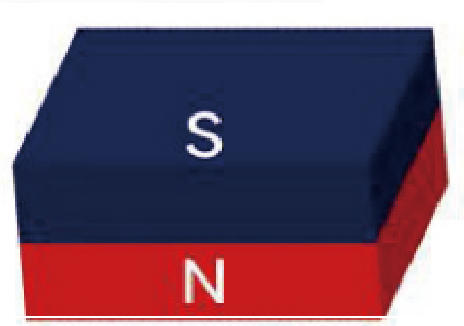
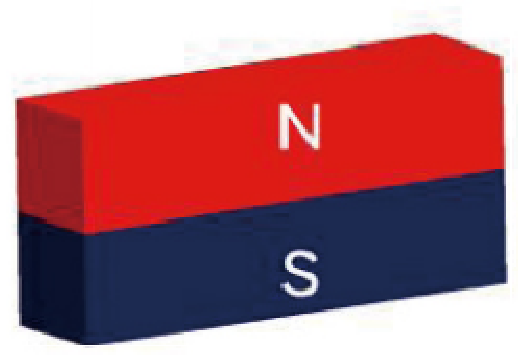
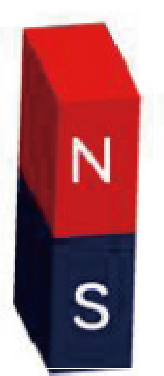
Available magnetisation directions — Block / bar magnets
The magnetisation direction is fixed when the magnet is magnetised and cannot be changed afterwards, so the direction must be confirmed before production.


Manufacturing capability & measured data
Tolerance
- Standard production
- ±0.05 mm
- Critical dimensions (on request)
- ±0.02 mm
Quoted per dimension against international dimensional quality standards, not as one blanket percentage. ±0.05 mm is the standard band; where a drawing calls for more, critical dimensions are held to ±0.02 mm using grinding or wire-cutting. The final tolerance is confirmed against your drawing before production.
Salt spray
- Duration depends on coating
- 12 – 96 h
Tell us how many hours your application needs and we match the coating to it. The test standard and the hours each coating reaches are confirmed on request.
Lead time
- Sample
- 10 – 15 days
- Small batch
- 20 – 30 days
- Mass production
- 40 – 60 days
Bands are by order type, not a single quantity threshold; exact lead time is confirmed at quotation.
Measured N52 properties
- Remanence Br
- 1,420 mT
- Intrinsic coercivity Hcj
- ≥ 955 kA/m
- Max energy product BHmax
- ≥ 390 kJ/m³
- Max operating temperature
- 60 °C
N52 has the highest flux of the sintered grades and the lowest heat tolerance: its maximum operating temperature is 60 °C, against 80 °C for N35–N48. For higher temperatures we move to an H, SH or UH grade and accept slightly lower flux.
Measured N54 / N55 properties
- Remanence Br
- 1.445 T
- Coercivity Hcb
- 991 kA/m
- Intrinsic coercivity Hcj
- 1,014 kA/m
- Max energy product (BH)max
- 396.46 kJ/m³
- Hk
- 988 kA/m
- Hd
- 550 kA/m
- Bd
- 0.721 T
- Hd5
- 927 kA/m
- Hk / Hcj
- 97.4 %
- (BH)max – Pc
- 1.04
Catalogue range and specialty grades
- Standard catalogue range
- N35–N52 (M–AH series)
- Specialty grade, on request
- N54 / N55
- Designation
- N54 (China) · N55 (international)